Iconic Music Photography
The genre was built on two things that no longer exist — unlimited access and film pushed to its limit in the dark. Eight photographs, and what made them possible.

Music photography is a genre built on two conditions that have since disappeared: unrestricted access to musicians, and film pushed to its limits in almost no light. The canonical pictures — Herman Leonard's smoke-filled jazz clubs, Jim Marshall at San Quentin, Pennie Smith's blurred bass guitar — were made by photographers who lived alongside their subjects rather than working from a photo pit.
Access, and almost no light
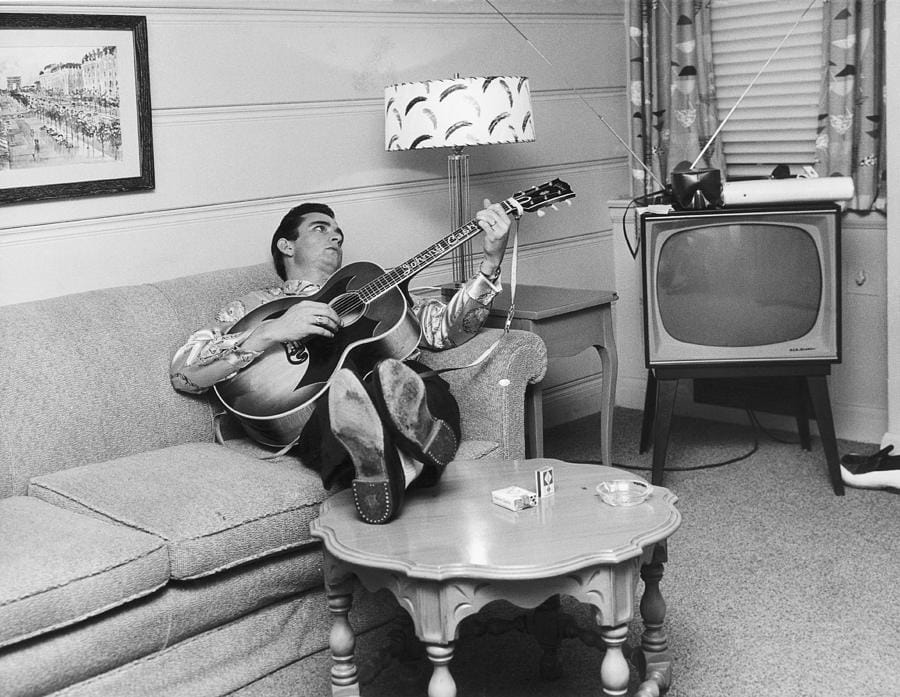
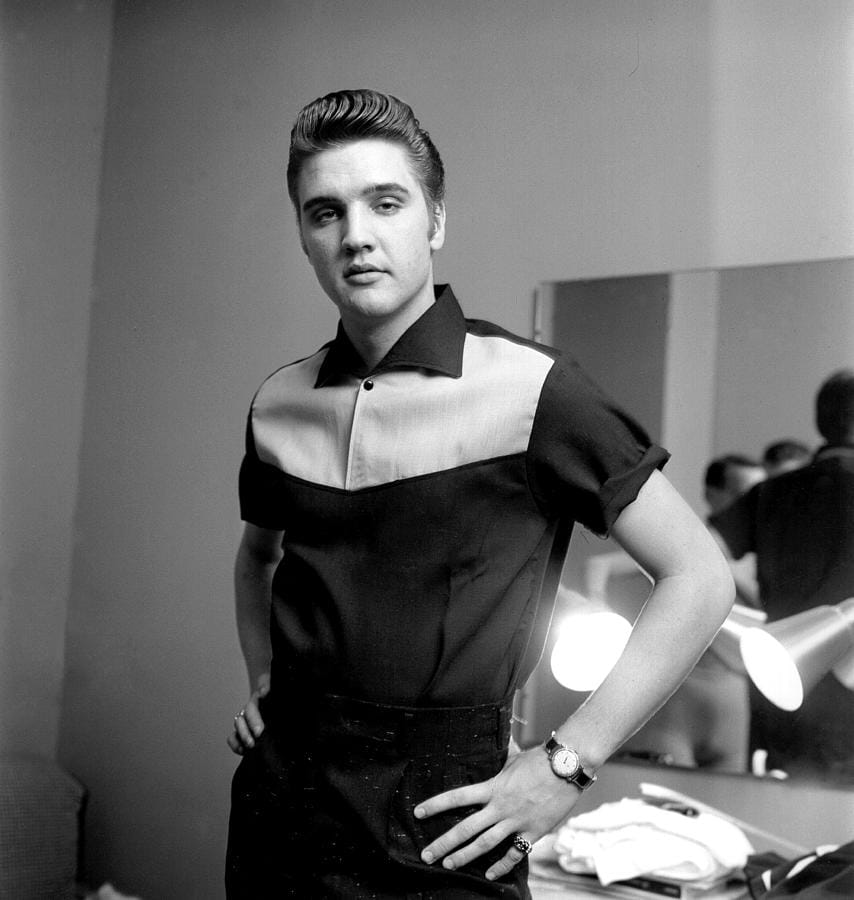
Two things explain almost every great music photograph, and neither is talent alone. The first is access. Before the mid-1980s a photographer was not a credentialed visitor but part of the touring party. Alfred Wertheimer spent ten days traveling with Elvis Presley in 1956 and made more than two thousand frames; nobody supervised what he shot. Jim Marshall had the run of backstage in San Francisco for a decade. Bob Gruen was a friend who happened to bring a camera. What replaced that — three songs from the pit, no flash, an approval list, a signed rights assignment — makes the old pictures unrepeatable.
The second is darkness. A jazz club in 1948 or a rock stage in 1972 was lit for the audience, not for film. Photographers shot 400 ISO black-and-white stock and developed it as if it were 1600 or 3200, wide open, at shutter speeds too slow to freeze a moving arm. The result is the look everyone now imitates with filters: heavy grain, blocked shadows, blown highlights, motion smeared across the frame.
That grain is not nostalgia. It is a record of how little light there was, and it is why the prints hold up at large sizes — the texture is as much the subject as the musician.
Eight photographs that made the canon
| Photograph | Photographer | Year | What happened |
|---|---|---|---|
| Dexter Gordon, Royal Roost | Herman Leonard | 1948 | Gordon cradling his tenor, smoke pouring through a stage light. Leonard lit the smoke rather than the man, and invented how jazz looks |
| Elvis Presley backstage, “The Kiss” | Alfred Wertheimer | 1956 | Made under the fire stairs of the Mosque Theatre, Richmond, on June 30, during ten days on Presley’s first national tour |
| Jimi Hendrix burning his Stratocaster | Ed Caraeff | 1967 | Monterey Pop, June 18. Caraeff was seventeen, at the front of the stage, and shot it on his last frame |
| Johnny Cash at San Quentin | Jim Marshall | 1969 | Marshall called “let’s do one for the warden” and Cash obliged. He later called it the most ripped-off photograph in the world |
| Abbey Road | Iain Macmillan | 1969 | Six frames in ten minutes on August 8, from a stepladder, a hired policeman holding the traffic. Frame five became the sleeve |
| John Lennon, New York City T-shirt | Bob Gruen | 1974 | Lennon’s East 52nd Street rooftop, August 29. Gruen had given him the shirt a year before and asked if he still had it |
| Paul Simonon, London Calling | Pennie Smith | 1979 | The Palladium, New York, September 21. Smith thought it too soft to use; Joe Strummer overruled her and the blur became the point |
| John Lennon and Yoko Ono | Annie Leibovitz | 1980 | Shot for Rolling Stone on December 8, hours before Lennon was killed. It ran as the cover with no cover lines |
The album sleeve as a mass medium
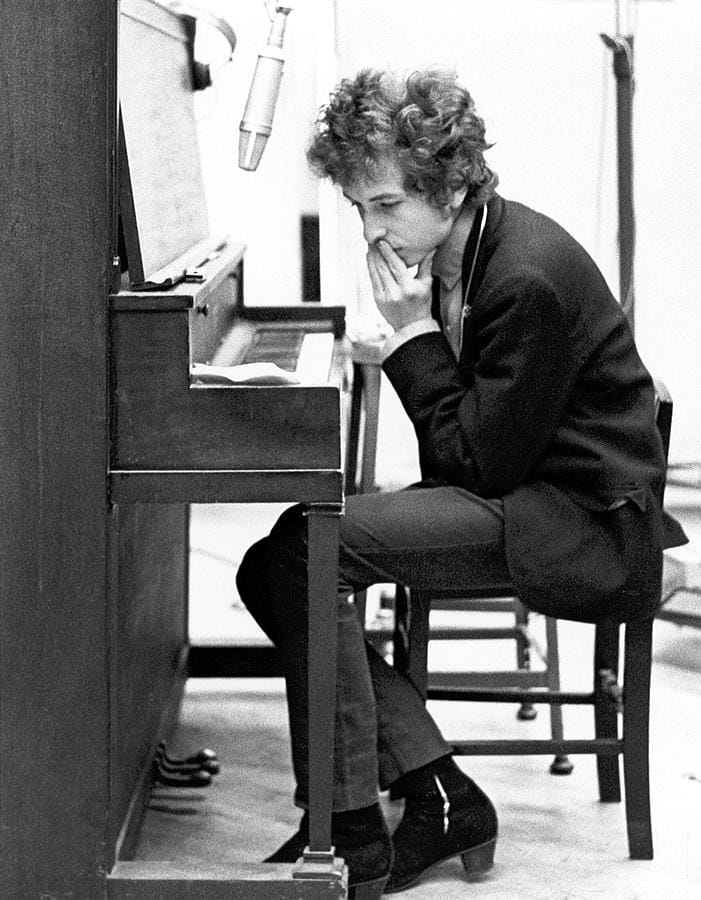
It is easy to forget how music photography actually reached people. For thirty years the delivery format was a twelve-inch square of cardboard — in most households the only reproduced photograph anybody had chosen deliberately, looked at for the length of a side, repeatedly, for years.
That gave the form a discipline. Blue Note is the clearest case: Francis Wolff, who co-founded the label with Alfred Lion, photographed the sessions himself, and from the mid-1950s the designer Reid Miles cropped those frames hard, printed them in two colors and set them against enormous typography. The photographs were not illustrations of the music but the visual half of the same product.
The compact disc shrank the format to under five inches; streaming shrank it to a thumbnail. The pictures did not get worse — they lost the surface they were made for, which is most of why a print market for album cover photography exists. A session photograph on a wall at 30 inches is closer to its original scale than any way you have heard the record.
The photographers, and where the archives went
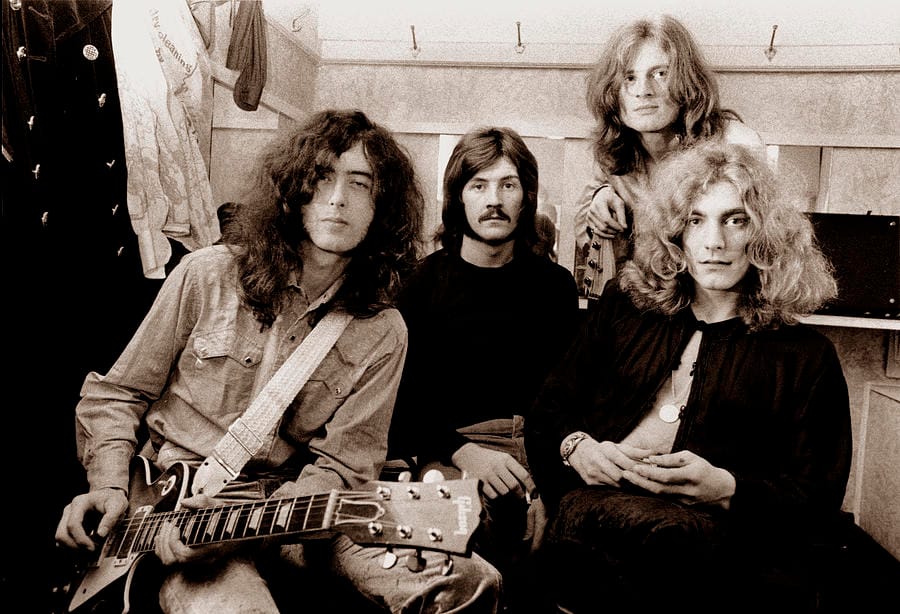
The genre concentrated into a handful of careers, and those careers into a handful of archives. Herman Leonard defined jazz photography at the Royal Roost and Birdland in the late 1940s; Jim Marshall owned San Francisco through the 1960s; Baron Wolman was Rolling Stone’s first chief photographer. Chris Walter and Fin Costello shot the British rock circuit through the 1970s and 1980s — Costello’s Rush, Queen and Kiss sessions, Walter’s Led Zeppelin, Pink Floyd and Bowie. Pennie Smith and Anton Corbijn gave British post-punk its gray, high-contrast look.
Then there is Michael Ochs, a different kind of figure. Brother of the folk singer Phil Ochs, he was a collector rather than a photographer, and from the mid-1970s he assembled the largest privately held archive of music imagery in the world — roughly three million prints, contact sheets and negatives from the 1940s to the 1990s. Getty Images bought it in 2007. Much of what carries a Michael Ochs Archives credit is work by press photographers whose own names are lost; the archive is why the images survived.
Living with music photography
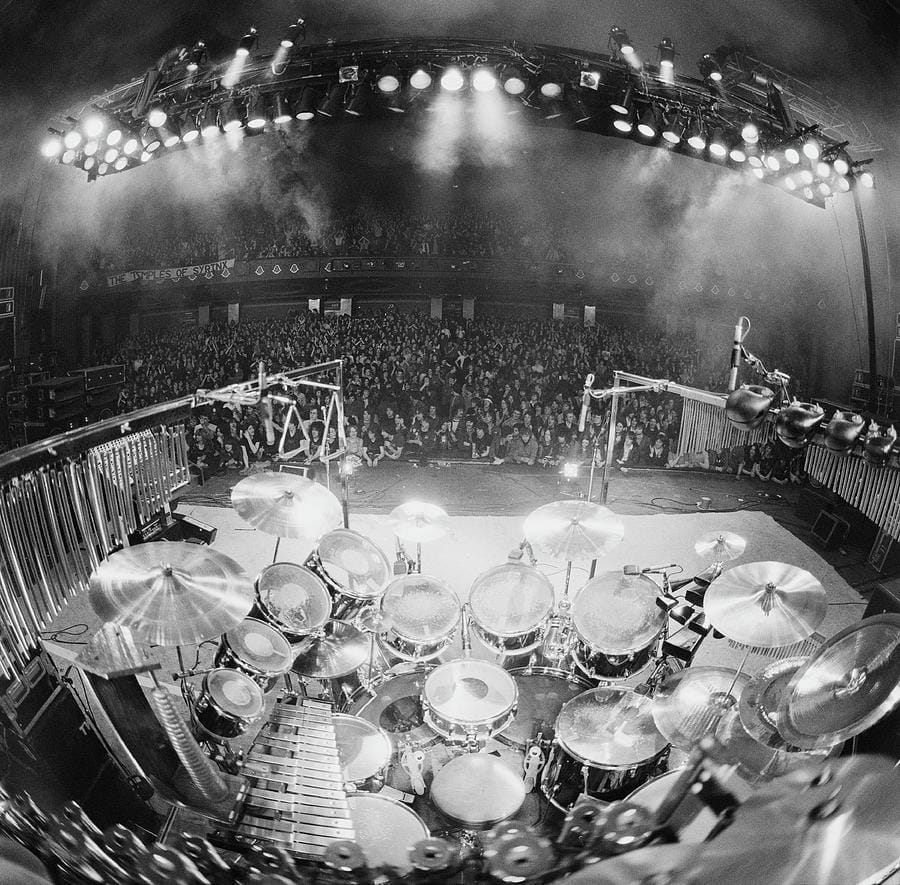
Music photography behaves differently on a wall from most genres, in three ways.
It needs size. Grain, blur and blocked shadows are the content. Print small and they read as flaws; print large and they read as evidence. Thirty inches on the long edge is the floor for a live shot; 40 to 60 is where they come alive.
It takes a black frame, which most photography does not. These images are already high-contrast and stage-lit, so black extends the picture rather than fighting it. A generous white mat inside a narrow black frame is the standard gallery treatment, and it is standard because it works.
It is a hallway and stairwell genre. Close-range portraits reward being seen close up, and corridors are where people pass within arm’s length. A run of four or five, identically framed and evenly spaced on a 57 to 60 inch center line, looks considered rather than like memorabilia.
One thing to avoid: do not mix eras on one wall. A 1948 jazz portrait and a 1979 punk shot are both grainy monochrome, but the tonality is completely different and the mismatch shows.
Frequently asked questions
Who took the photograph of Jimi Hendrix burning his guitar?
Ed Caraeff, at the Monterey International Pop Festival on June 18, 1967. He was seventeen years old, standing at the front of the stage, and shot it on the last frame he had loaded. It later became the only photograph to appear twice on the cover of Rolling Stone.
What is the story behind the Johnny Cash middle finger photograph?
Jim Marshall took it at Cash's concert at San Quentin State Prison on February 24, 1969. Marshall asked Cash to do a shot for the warden, and Cash raised his middle finger to the lens. Marshall later described it as probably the most ripped-off photograph in the world.
Why is so much classic music photography grainy?
Because venues were lit for audiences, not cameras. Photographers shot black-and-white film rated at 400 ISO and developed it as though it were 1600 or 3200 to gain enough exposure. That produces coarse grain, heavy shadows and motion blur. The texture is a record of the darkness rather than a stylistic choice.
Who photographed the Abbey Road album cover?
Iain Macmillan, on the morning of August 8, 1969. Working from a sketch Paul McCartney had given him, he shot six frames in about ten minutes from the top of a stepladder in the middle of the road while a hired policeman held the traffic. The fifth frame became the sleeve.
What are the Michael Ochs Archives?
The largest privately assembled collection of music photography in the world, built from the mid-1970s by Michael Ochs, brother of the folk singer Phil Ochs. It holds roughly three million prints, contact sheets and negatives covering the 1940s to the 1990s. Getty Images acquired it in 2007.
How should music photography be framed?
A wide white mat inside a narrow black frame. Unlike most photography, these images take a black frame well, because they are already high-contrast and stage-lit. Print large — thirty inches on the long edge is a sensible minimum, since grain and blur need scale to read as intended.
Licensed prints from the surviving archives are browsable under Michael Ochs, Chris Walter and Fin Costello, and by subject under jazz, rock and roll and concert photography. Our guide to black-and-white photography for the home covers mats, sizes and where monochrome works in a room.