Carl Larsson’s Ten Most Famous Paintings
Flowers on the Windowsill, Mirror-image with Brita, Holiday Reading and more: ten works by the Swedish painter whose family home became a national idea of how to live.

Carl Larsson (1853–1919) grew up in extreme poverty in Stockholm's old town, in conditions he described later with real bitterness, and was pushed into the Academy by a teacher who spotted him at a school for the poor. Years of struggle in Paris followed. The change came at the artists' colony at Grez-sur-Loing, where he switched from oil to watercolor, lightened his palette, and met the painter Karin Bergöö, whom he married.
In 1888 Karin's father gave them a small house at Sundborn in Dalarna, and the two of them spent decades rebuilding it — Karin designing furniture and textiles, Carl painting the rooms and everyone in them. The watercolors he made there were published as books, and they did something no gallery career could have: they gave Sweden a picture of domestic life so appealing that it became a national style. Light walls, painted furniture, plants at the window, and children everywhere — the Larsson interior runs straight through twentieth-century Swedish design. Here are ten of his best-known paintings.
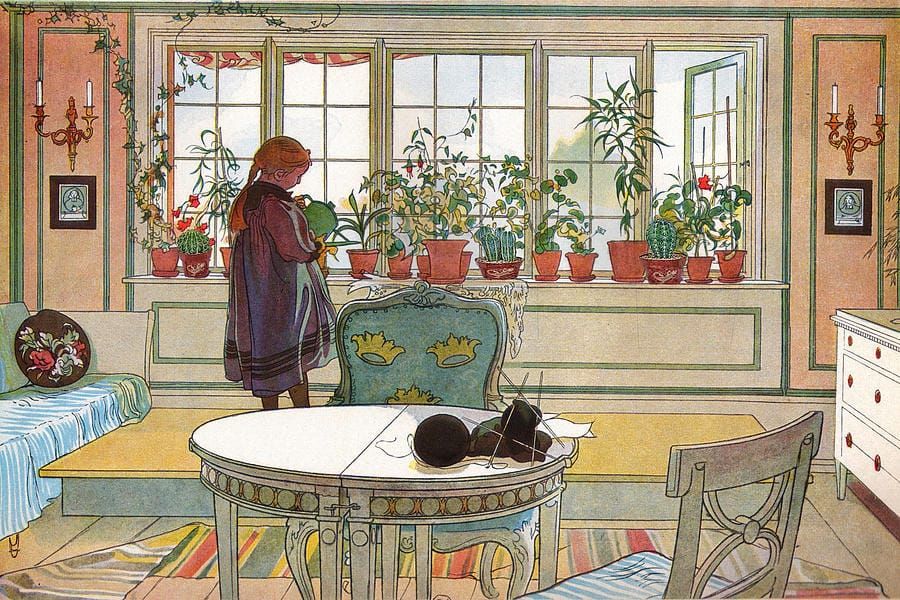
Flowers on the Windowsill
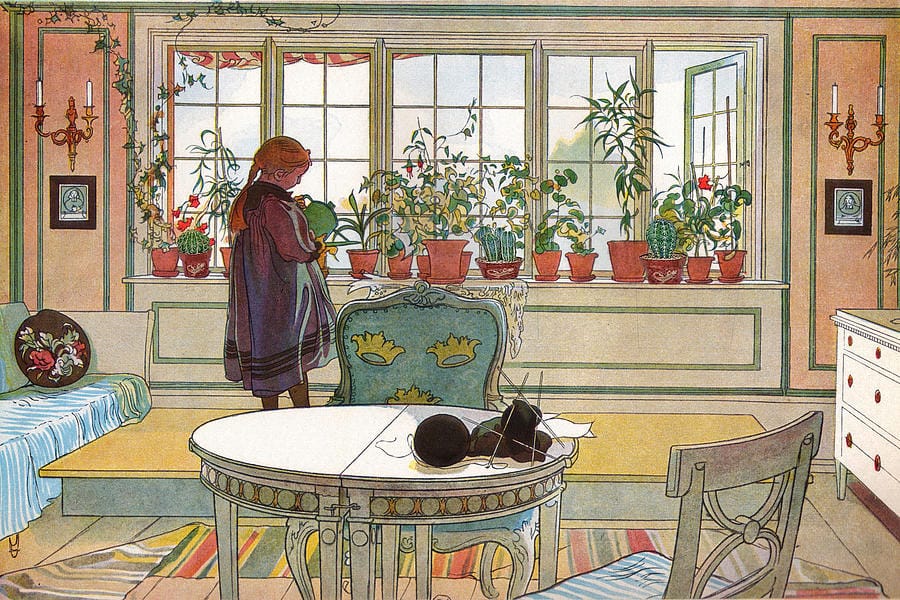
The single motif that sums up the whole Sundborn project: potted plants crowded along a window ledge with light pouring through them into a pale room. Larsson painted versions of this again and again. It looks like nothing — a corner, some geraniums — and that is the argument. He was proposing that a well-kept ordinary room deserved the attention painting usually reserved for history and myth, and the enormous popularity of the published watercolors suggests a great many people agreed.
Cock-a-doodle-do, Its Seven Oclock
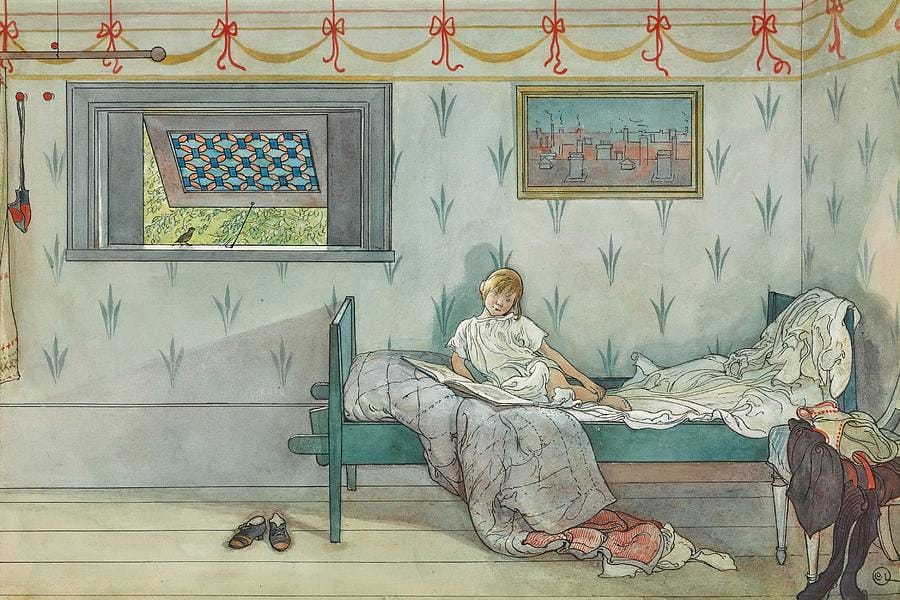
One of the family scenes, in which a child is being got out of bed in the morning. The comedy and the domestic detail are typical of Larsson's method: he used his own children as models constantly, painted them in the actual rooms of his own house, and gave the pictures titles that read like captions in a family album. The rooms themselves are the second subject — the painted bedstead, the striped textiles, the light-colored woodwork all designed by Karin.
Mirror-image With Brita
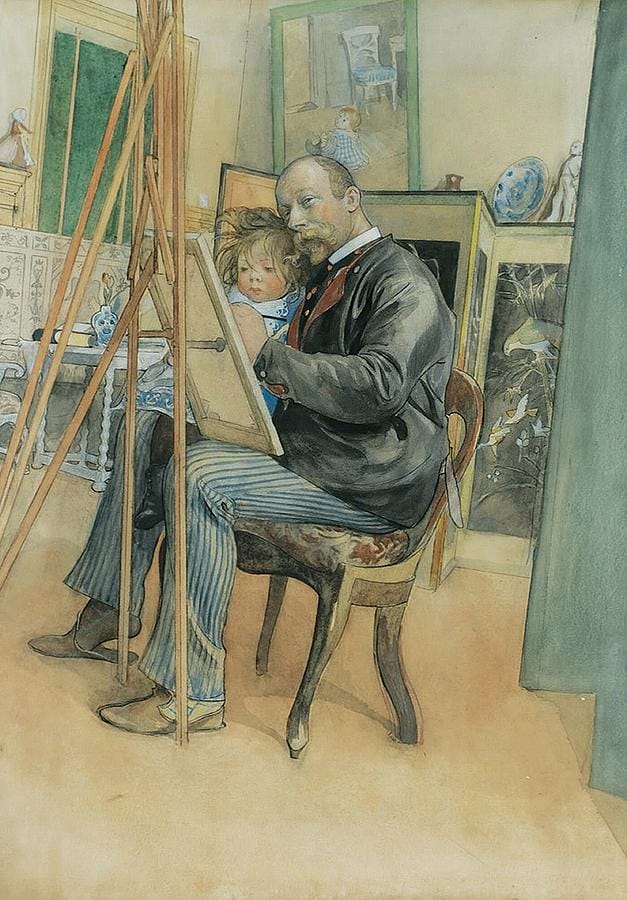
A portrait of one of the Larsson daughters constructed around a mirror, so that the child appears twice and the room is shown from two directions at once. Larsson liked this device and used it more than once; it let him solve a compositional problem — how to open up a small interior — and add a note of play at the same time. His handling of watercolor is at its most confident in pictures like this, laid in wet and quickly with very little correction.
Holiday Reading
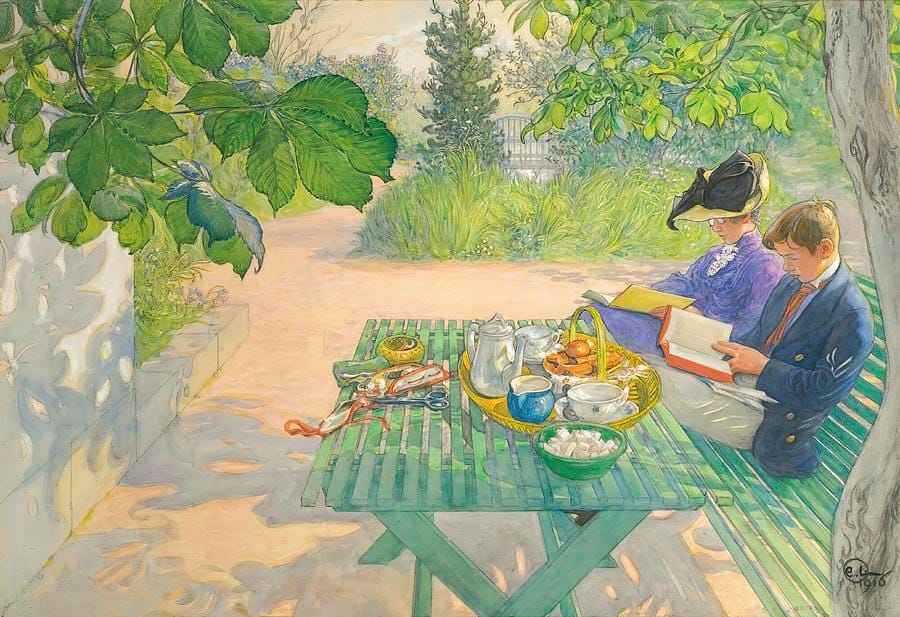
A figure absorbed in a book in a quiet corner of the house. Larsson's interiors are almost always occupied by someone doing something unremarkable — reading, sewing, writing a letter, dozing — and he is careful never to have them look at the viewer. The result is a picture that feels observed rather than posed, which is central to the impression of unforced comfort that made the Sundborn images so widely loved.
In The Snow
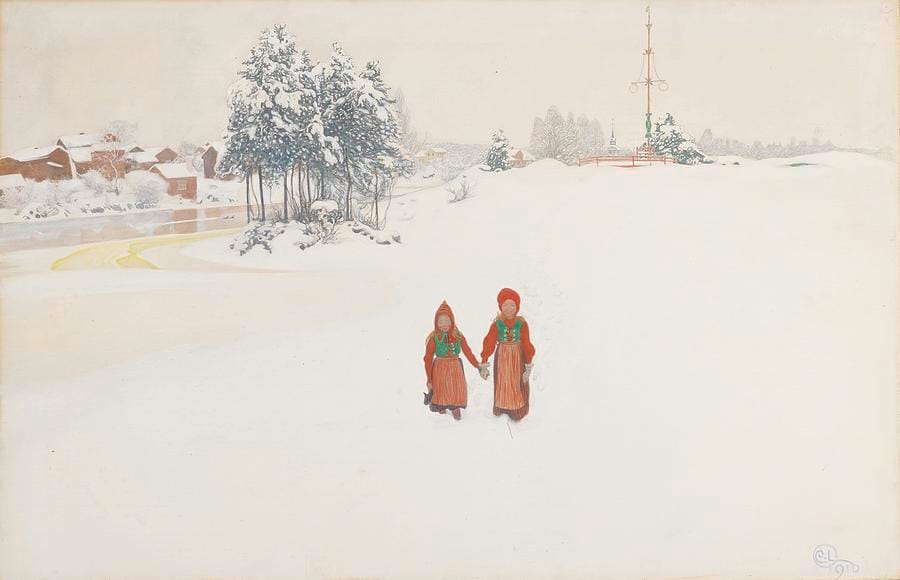
Dalarna in winter gave Larsson a completely different palette from his interiors: white, blue shadow, and the strong red of the local painted timber houses. He was deeply attached to the province and to the idea of a specifically Swedish rural culture, and his winter subjects are part of the same nationally-minded project as the domestic ones — a portrait of a way of living, rendered attractive enough to want.
Age Of Seventeen
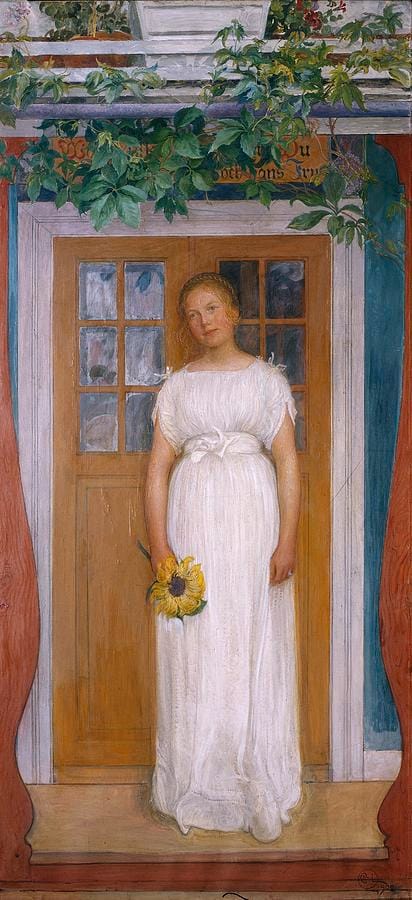
A study of a young woman at the point of no longer being a child, and one of the more searching portraits in Larsson's output. He watched his own children grow across three decades of pictures, so his work carries an unusual record of the same faces at successive ages. The lightness of touch that makes the family scenes charming is used here for something more reflective.
At The Piano
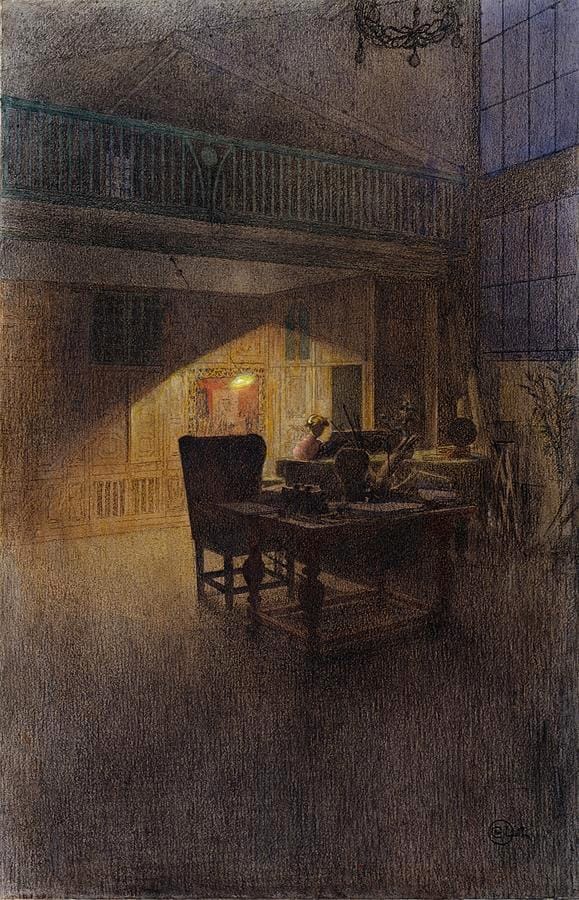
Music was a fixture of the household at Sundborn, and Larsson painted the piano and the people at it repeatedly. The subject let him do two things he was good at: place a figure in a room so that the furniture and the light are as important as the person, and record an activity that fills a house without requiring any narrative. The scene is domestic, unhurried, and specific to a real room he knew intimately.
Say Hello To The Gentleman!
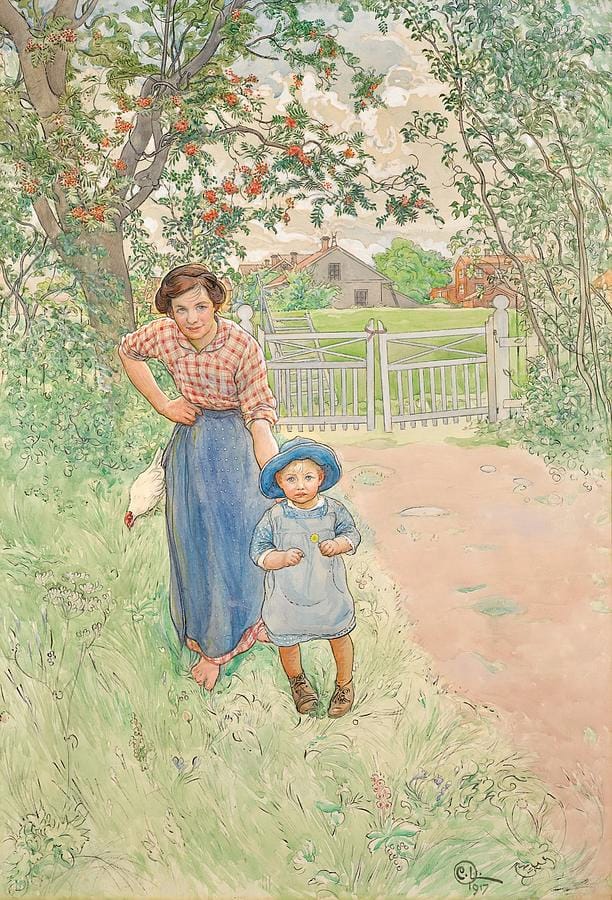
A small child is being encouraged to greet a visitor — the kind of minor domestic embarrassment that almost never gets painted. Larsson's humor is a genuinely unusual quality in the art of the period, and it is one reason the Sundborn pictures escaped the sentimentality they flirt with. He is affectionate about his family without pretending they are always charming.
Lisbeth As The Evil Princess In The Fairy Tale Fagel Bla
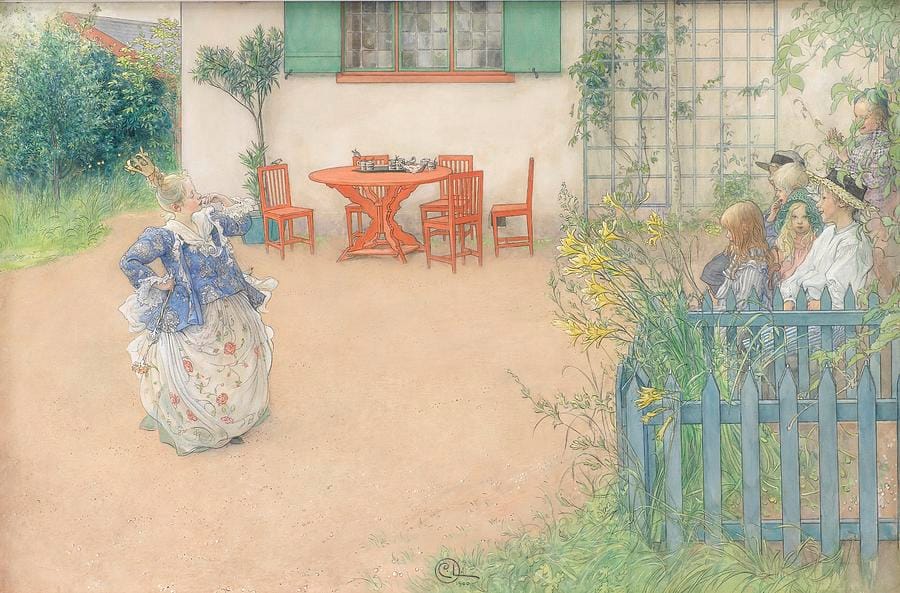
One of the Larsson children in costume for a story — Fågel Blå, a Swedish fairy tale. The household made its own entertainments, and dressing up recurs throughout the work. These pictures sit at the join between portraiture and illustration, which suited Larsson well: he had worked as a professional illustrator for years and never treated the skill as beneath painting.
Mother And Daughter
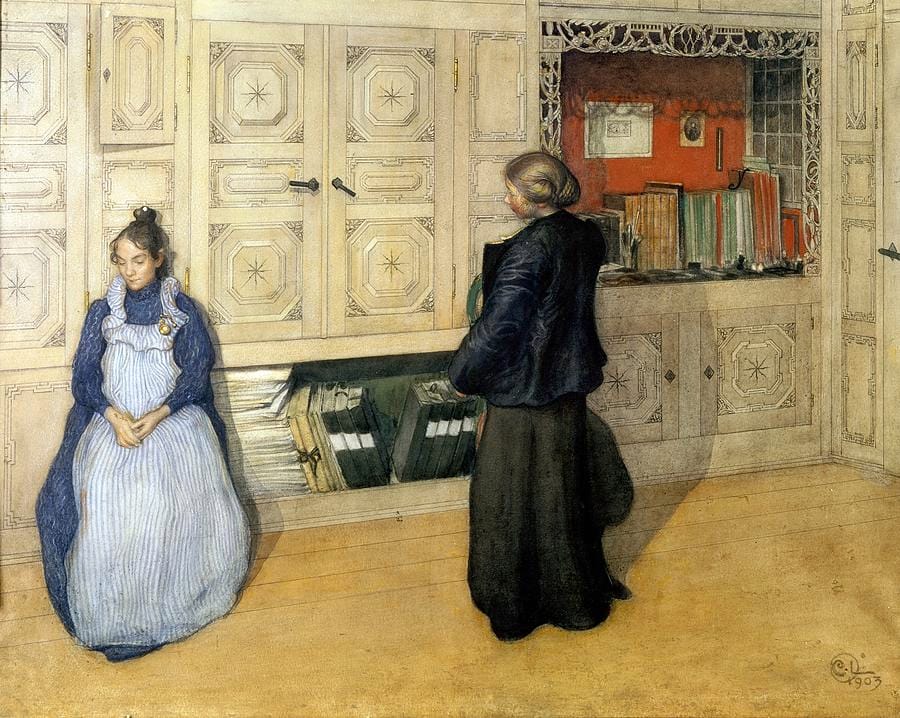
Karin Larsson appears throughout her husband's work, usually occupied and rarely posed, and the pictures of her with the children are among the warmest things he made. Karin was an artist in her own right who largely set aside her own painting for the design of the house and its textiles, work that is now recognized as significant in its own terms rather than as a backdrop to his.
Larsson died at Sundborn in 1919, convinced that his large public murals were his real achievement and mildly frustrated that the watercolors of his house were what people loved. The house is a museum today, and the way of decorating a room that he and Karin worked out there has outlasted almost everything else in Swedish painting of the period.
Shop Carl Larsson prints here, and explore the rest of our famous paintings collection for more of the world’s most beloved masterpieces.